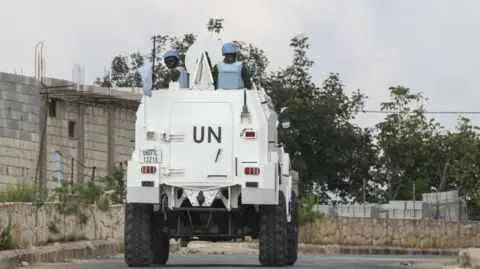
A Nation on the Brink: Guinea's Political Landscape Shattered
Reporting for 24x7 Breaking News, we are tracking a seismic shift in West African democracy as the military-led government in Guinea has abruptly dissolved 40 political parties. This sweeping decree, issued late Friday by the Ministry of Territorial Administration and Decentralisation, effectively seals the offices and bans the symbols of nearly the entire opposition landscape.
- A Nation on the Brink: Guinea's Political Landscape Shattered
- The Erosion of Democratic Institutions
- The Human Cost of Political Consolidation
- A Regional Trend of Military Consolidation
- Frequently Asked Questions (FAQ)
- Why were the political parties in Guinea dissolved?
- Who is the leader of the current junta in Guinea?
- What is the response from the political opposition?
- The Path Forward for Guinea
The move has sent shockwaves through the capital, Conakry, and beyond. Cellou Dalein Diallo, the country’s primary opposition leader currently living in exile, did not mince words in a video statement released Sunday. Diallo declared that the military junta, led by President Mamady Doumbouya, has openly declared war on the democratic process.
The Erosion of Democratic Institutions
President Doumbouya, who first seized power in a 2021 coup that ousted longtime leader Alpha Condé, has systematically tightened his grip on the nation. The recent decree cites a failure to comply with legal requirements—specifically the submission of mandatory financial disclosures—as the primary justification for the mass dissolution.
However, the affected parties, including Diallo’s Union of Democratic Forces of Guinea and the former ruling Rally of the People of Guinea, vehemently deny these claims. They argue that the government is utilizing bureaucratic technicalities to eliminate any political entities capable of challenging the nascent one-party state. For more context on how transparency and accountability are being weaponized globally, read our recent report on the Justice Dept. Accused of Withholding Trump-Epstein Files.
The Human Cost of Political Consolidation
While the headlines focus on power dynamics in government halls, the human reality for the people of Guinea is far more precarious. When political parties are erased, citizens lose their primary vehicles for peaceful advocacy and representation. This creates a vacuum often filled by uncertainty, economic instability, and the risk of civil unrest.
For the average Guinean family, the dissolution of these organizations represents more than just a legal change; it signifies the closing of a door on their ability to demand accountability from those in charge. As we have seen in other global contexts, such as the challenges facing modern youth and public order, when institutions fail, the burden of stability falls squarely on the shoulders of the citizenry.
A Regional Trend of Military Consolidation
Guinea’s decision mirrors a broader, worrying trend across the Sahel and West Africa. In Burkina Faso, authorities similarly banned all political parties in January as part of a strategy to consolidate power. Experts warn that this signals a retreat from the democratic progress seen in the region over the last two decades.
Jean-Marc Telliano, president of the Rally for the Integrated Development of Guinea, has vowed to resist the measure through legal channels. Yet, with the judiciary often aligned with the executive in such regimes, the path to justice remains narrow. The international community is now watching closely as the country inches toward legislative elections, which serve as a critical litmus test for the junta's promise of a transition to civilian rule.
Frequently Asked Questions (FAQ)
Why were the political parties in Guinea dissolved?
The Ministry of Territorial Administration cited a failure to comply with legal requirements, including the submission of mandatory financial statements, as the cause for the dissolution.
Who is the leader of the current junta in Guinea?
Mamady Doumbouya is the head of the military junta and currently serves as the President of Guinea following the 2021 coup.
What is the response from the political opposition?
Opposition leaders, including the exiled Cellou Dalein Diallo, have rejected the government's accusations as a pretext for establishing a one-party state and have called for "direct resistance" to the regime.
The Path Forward for Guinea
The dissolution of 40 parties just two months before scheduled legislative elections underscores the volatile nature of Guinea’s transition. Whether this strategy secures the junta’s long-term authority or triggers an inevitable pushback from the populace remains the defining question of the current crisis.
If you were a political leader facing a military takeover, would you choose to fight from within the system, or is direct resistance the only moral path left?


This article was independently researched and written by Hussain for 24x7 Breaking News. We adhere to strict journalistic standards and editorial independence.
Comments
Post a Comment