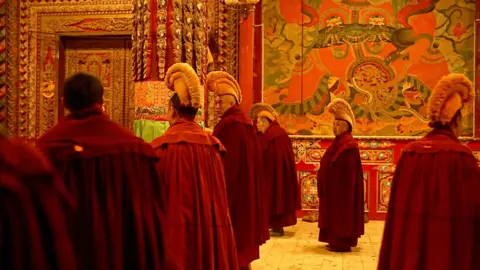
Reporting for 24x7 Breaking News, Beijing – China is poised to enact a sweeping new law this week aimed at bolstering "ethnic unity," a move that critics and academics warn will accelerate the assimilation of its diverse minority populations into the dominant Han culture and further erode their distinct identities and way of life. The legislation, expected to be formally approved during the nation's annual parliamentary session, codifies and expands upon decades of policies that have drawn international condemnation for their repressive nature.
- Beijing's Vision for 'Modernization Through Unity'
- A History of Suppression and Resistance
- The Human Cost of Assimilation
- Frequently Asked Questions (FAQ)
- What is the primary goal of China's new 'ethnic unity' law?
- Which ethnic groups are most affected by this law?
- How does this law address language and religion?
Beijing's Vision for 'Modernization Through Unity'
The Chinese government, however, champions the law, officially titled "Promoting Ethnic Unity and Progress," as a vital step toward national modernization. Officials assert it is crucial for fostering greater cohesion and shared national identity. Yet, human rights organizations and scholars argue that the law's provisions will disproportionately impact ethnic minorities, including the Uyghurs in Xinjiang and Tibetans, by prioritizing Mandarin over indigenous languages, encouraging intermarriage, and broadly prohibiting any actions deemed detrimental to "ethnic unity."
This legislative push aligns with President Xi Jinping's broader agenda of "Sinicisation of religion," a policy that seeks to align religious practices with Communist Party-approved Chinese culture and values. Experts view the new law as an entrenchment of this core tenet of Xi's leadership. "The regime is essentially saying that all the policies we've implemented – promoting Mandarin, restricting minority identity expression, curbing religious practices – are not only correct but are now being elevated from mere policy to the level of basic law," stated Aaron Glasserman, a researcher at the University of Pennsylvania.
A History of Suppression and Resistance
China officially recognizes 55 ethnic minority groups, ranging from populations of tens of thousands to millions. However, the government has historically focused its most intense scrutiny and repressive measures on specific regions. The gravest allegations of human rights abuses have consistently emerged from Xinjiang, home to the Uyghur and other Turkic minorities, and Tibet. Rather than granting greater autonomy, Beijing has often relied on the threat of retribution to quell any aspirations for separatism.
The historical record is marked by periods of significant unrest and subsequent crackdowns. In the lead-up to the 2008 Beijing Olympics, Tibetan monks spearheaded an uprising in Lhasa that was met with force; Beijing reported 22 deaths, while Tibetan exile groups estimated around 200. The following year, violent clashes between Uyghurs and Han Chinese in Urumqi, Xinjiang's capital, resulted in nearly 200 fatalities. More recent incidents include a 2013 car bombing near Tiananmen Square attributed to Uyghur separatists and a 2014 attack at a Yunnan train station by Uyghurs.
While Beijing often justifies its heavy-handed tactics by citing these violent incidents, international bodies like the United Nations and various human rights groups allege that over a million Uyghur Muslims have been arbitrarily detained in what the Chinese government describes as "re-education" and vocational training centers. Reports from these regions consistently detail the curtailment of religious practices, the closure of mosques, and the suppression of cultural expression. Similarly, in Tibet, monasteries, once centers of local power, are now under strict government control. Educational directives mandate Mandarin instruction for all under 18, prohibiting the study of Buddhist texts, a significant blow to a community where monastic education was once a traditional path for children.
Recent years have also seen upheaval in Inner Mongolia due to restrictions on Mongolian language education and in Ningxia, where Hui Muslim mosques have faced demolition orders. Analysts suggest that the new law may be an attempt to preemptively supersede existing legal protections for minority rights, particularly in strategically vital regions that serve as crucial links to neighboring countries and global trade routes.
This drive for uniformity echoes the sentiments of China's founder, Mao Zedong, who noted that while the Han nationality comprises the vast majority of the population, minority regions are often rich in territory and resources. Though ethnic minorities like the Uyghurs number in the millions, they are vastly outnumbered by the Han Chinese, who constitute over 90% of the country's citizens. The homelands of Tibetans, Uyghurs, and Mongolians, however, are vast and mineral-rich territories.
The Human Cost of Assimilation
For ordinary families, the implications of this law are profound. The emphasis on Mandarin education can alienate younger generations from their linguistic heritage, potentially severing vital intergenerational ties and cultural transmission. The prohibition against acts damaging to "ethnic unity" creates a broad, subjective standard that could be used to criminalize even peaceful expressions of cultural identity or dissent. This chilling effect on expression can lead to a sense of alienation and disenfranchisement among minority communities, mirroring concerns seen in other geopolitical contexts where dominant cultures exert pressure on distinct groups. The echoes of international tensions, such as those seen in the escalating conflicts in the Middle East, highlight the global fragility of peace and the devastating human cost when cultural or political divisions deepen.
The pressure to conform can also create internal divisions within families, as parents navigate the state's demands to instill loyalty to the Communist Party in their children. This is particularly stark in regions with strong religious traditions, where adherence to cultural practices is often intertwined with faith. The potential for increased surveillance and control over daily life, under the guise of promoting unity, raises serious concerns about individual freedoms and the right to cultural self-determination.
Frequently Asked Questions (FAQ)
What is the primary goal of China's new 'ethnic unity' law?
The stated goal is to promote national modernization through greater unity. However, critics argue the law primarily aims to accelerate the assimilation of ethnic minorities into the dominant Han Chinese culture.
Which ethnic groups are most affected by this law?
While the law applies broadly, the most significant impacts are expected on groups like the Uyghurs in Xinjiang and the Tibetans, regions where the government has historically implemented stringent assimilationist policies.
How does this law address language and religion?
The law promotes Mandarin as the primary language, potentially diminishing the status of minority languages. It also aligns with President Xi Jinping's policy of "Sinicisation of religion," requiring religious practices to conform to Communist Party standards.
China's push for ethnic unity through this new law represents a significant escalation in its efforts to forge a singular national identity, potentially at the expense of its rich tapestry of minority cultures. The long-term consequences for human rights and regional stability remain a critical concern, echoing broader global discussions about cultural preservation and state power, much like the ongoing scrutiny surrounding sensitive government document handling or the transparency issues in international finance.
Given the global trend towards both increased cultural exchange and nationalistic consolidation, will China's intensified focus on 'ethnic unity' ultimately strengthen or fracture its social fabric in the long run?



This article was independently researched and written by Hussain for 24x7 Breaking News. We adhere to strict journalistic standards and editorial independence.
Comments
Post a Comment