Reporting for 24x7 Breaking News.
- War's Reach Extends to Beirut's Core
- Iran Denounces 'Cowardly Assassination'
- A City Under Siege: Voices from Raouche
- Displacement and the Shifting Frontlines
- Frequently Asked Questions (FAQ)
- What was the target of the Israeli strike in Beirut?
- Who was reportedly killed in the strike?
- Has the conflict expanded into central Beirut before?
- What is Iran's official stance on the incident?
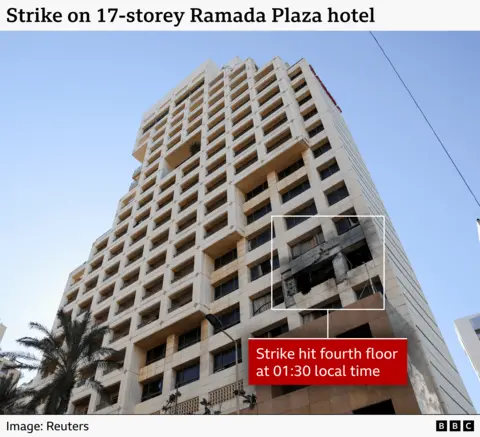
A powerful explosion ripped through Beirut's upscale Raouche neighborhood in the early hours of March 8th, as an Israeli strike targeted the Ramada Plaza hotel. This marks a significant escalation, bringing the ongoing conflict directly into the heart of the Lebanese capital's bustling city center for the first time. The Israeli military asserted that the strike eliminated a clandestine meeting of Iranian operatives, an accusation vehemently denied by Tehran.
War's Reach Extends to Beirut's Core
The predawn blast, occurring around 1:30 AM, jolted residents awake and sent shockwaves through a district typically known for its vibrant coastal promenade, luxury hotels, and bustling restaurants. The targeted strike, aimed at the fourth floor of the high-rise hotel, shattered the relative quiet of Ramadan night and underscored the broadening scope of the war that reignited between Israel and Hezbollah just a week prior.
The Lebanese Ministry of Public Health initially reported four fatalities and ten injuries, with identities unconfirmed. However, the Israel Defense Forces (IDF) later identified the five men killed as operatives of Iran's elite Quds Force, the external operations arm of the Islamic Revolutionary Guard Corps (IRGC). Among the deceased, the IDF claimed, were a senior financier responsible for channeling funds to Hezbollah and intelligence-gathering commanders.
Iran Denounces 'Cowardly Assassination'
Iran's mission to the United Nations in New York issued a stern response late Tuesday, condemning the strike as a "cowardly terrorist assassination of four diplomats of the Islamic Republic of Iran." This direct accusation from Tehran signals a potential deepening of regional tensions, framing the incident as a targeted political assassination rather than a military operation against combatants.
Hezbollah has maintained a strategic silence regarding the strike and its specific targets, offering no comment. The precision of the strike, while confined to a specific floor of the sprawling hotel, sent ripples of fear through the local community, as the war's proximity became a stark reality for those living and displaced in the area.
A City Under Siege: Voices from Raouche
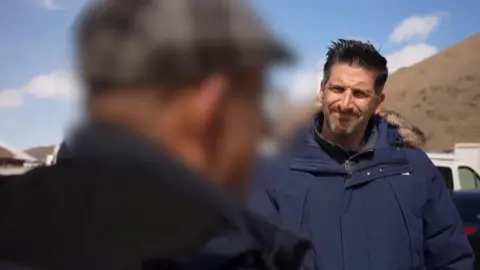
"This is not an area where you expect something like this to happen… of course we're scared," shared Yahya, a 47-year-old local, while waiting for his coffee at a nearby Starbucks. He described the explosion as a violent jolt that pulled him from his sleep, a stark contrast to the distant sounds of conflict he usually associated with southern Beirut's neighborhoods.
"I come outside for my sanity but it's scary - you don't know who's standing next to you or in a building next to you. In the bombings they often give warnings but in the assassinations they don't, and the Israelis don't care about bystanders," Yahya added, highlighting the palpable anxiety gripping the neighborhood.
Mousa Khodour, 33, was working at a coffee kiosk in the car park beneath the hotel when the strike occurred. He had grown accustomed to the drone hums that frequently filled the Lebanese skies, but the subsequent explosion was immense. "It was huge. The entire area shook," he recounted, his primary concern shifting immediately to his four children sleeping in a makeshift shelter nearby.
Thankfully, his children were unharmed, though his cousin, also named Mousa, sustained a leg injury from shrapnel. "I just remember the bang and the glass coming down. It was very painful," said the Syrian national, who had fled his war-torn country in 2013 seeking refuge in Lebanon, only to find himself caught in a new conflict.
Displacement and the Shifting Frontlines
The increasing displacement of civilians underscores the war's relentless pressure. The United Nations estimates that nearly 700,000 people in Lebanon have been forced from their homes due to the renewed hostilities, which began after Hezbollah launched rockets into Israel following the killing of Iran's Supreme Leader. Many of these displaced families are now occupying the very luxury hotels in areas like Raouche that once catered to tourists and business travelers.
The conflict, which initially concentrated on southern Lebanon, the Bekaa Valley, and the southern suburbs of Beirut—Hezbollah's traditional strongholds—has now demonstrably expanded its reach. This strike on a central Beirut hotel signals a strategic shift and a potential new phase of the war, raising profound questions about civilian safety and the broader implications for regional stability. The escalating violence also brings to mind other instances where government actions have drawn international scrutiny, such as the ongoing debate surrounding the Justice Dept. Accused of Withholding Trump-Epstein Files.
Frequently Asked Questions (FAQ)
What was the target of the Israeli strike in Beirut?
The Israeli military stated its target was a secret meeting of Iranian operatives on the fourth floor of the Ramada Plaza hotel in Beirut's Raouche neighborhood.
Who was reportedly killed in the strike?
The Israel Defense Forces (IDF) claimed five men killed were operatives of Iran's Quds Force, including a senior financier and intelligence commanders. Iran referred to them as diplomats.
Has the conflict expanded into central Beirut before?
This strike on the Ramada Plaza hotel marks the first time the current conflict has seen Israeli bombing campaigns directly hit the city center of Beirut.
What is Iran's official stance on the incident?
Iran's mission to the UN accused Israel of a "cowardly terrorist assassination of four diplomats of the Islamic Republic of Iran."
The war's expansion into the heart of Beirut, striking a luxury hotel and reportedly targeting high-level Iranian operatives, fundamentally alters the landscape of the current conflict. It raises critical questions about the war's true objectives and the willingness of all parties to avoid further civilian casualties.
With the war now reaching previously untouched areas of Beirut, where do regional powers draw the line to prevent a wider, uncontrollable conflagration?


This article was independently researched and written by Hussain for 24x7 Breaking News. We adhere to strict journalistic standards and editorial independence.
Comments
Post a Comment