Reporting for 24x7 Breaking News.
- Nantes Court Rejects Cardiff's Multi-Million Pound Damages Claim
- A High-Stakes Legal and Financial Imbroglio
- The Human Cost Beyond the Courtroom
- Broader Implications for Player Safety and Club Responsibility
- Frequently Asked Questions (FAQ)
- What was the total amount Cardiff City claimed in damages?
- What was the reason for Cardiff City's claim?
- What was the court's decision regarding FC Nantes' responsibility?
- What is the immediate financial penalty for Cardiff City?
- Does Cardiff City have an option to appeal?
- The Lingering Questions for Professional Football
A French judge has decisively thrown out Cardiff City's substantial claim for over €120 million (£104 million) in damages following the tragic death of footballer Emiliano Sala. The club had sought compensation from FC Nantes, arguing that Sala's loss prevented them from staying in the Premier League. The ruling, delivered in Nantes on Monday, not only dismisses the Welsh club's claim but also mandates that Cardiff City pay approximately £400,000 in legal fees and moral damages to FC Nantes.
Nantes Court Rejects Cardiff's Multi-Million Pound Damages Claim
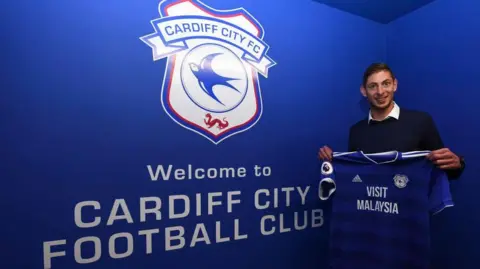
The legal battle stems from the devastating incident on January 21, 2019, when the Piper Malibu aircraft carrying Sala, then 28, and pilot David Ibbotson crashed into the English Channel. Sala was en route to join Cardiff City from FC Nantes, a transfer that had been agreed upon for a fee of £15 million. The club's claim was predicated on the assertion that Sala's presence could have secured their Premier League status, thereby preventing significant financial losses.
However, the court in Nantes found no basis for Cardiff City's claim, concluding that FC Nantes bore no responsibility for the tragedy. Attorneys for FC Nantes, Jérome Marsaudon and Louis Marie Absil, released a statement expressing their satisfaction with the verdict. "FC Nantes is in no way responsible for the tragedy that occurred, and we are pleased that the court has heard our case and confirmed this in very clear terms," they stated.
A High-Stakes Legal and Financial Imbroglio
The decision represents a significant financial blow to Cardiff City, who now face an immediate payment obligation regardless of any potential appeal. Representatives for the club, through Capital Law, have indicated that they will take time to consider the verdict. They have a one-month window to lodge an appeal, which would lead to a review by the Court of Appeal of Rennes, a process that could extend for up to two years and involve a complete rehearing of the case.
Celine Jones of Capital Law expressed deep regret over the court's decision, stating, "We initiated these proceedings so that the full truth of this case would come to light in respect of Emiliano Sala's memory." She added a poignant observation, "Today we note with great bitterness that the principles of transparency, integrity and safety in professional football have not prevailed in this decision." Jones emphasized the urgent need for enhanced safety and ethical standards within professional football to prevent future tragedies, suggesting the sport must critically examine its practices.
The Human Cost Beyond the Courtroom
Sala's mother, Mercedes Taffarel, was present in court to hear the ruling, underscoring the profound human impact of this protracted legal dispute. The loss of Emiliano Sala was a tragedy that resonated deeply within the football community, highlighting the inherent risks associated with player transfers, particularly when private travel arrangements are involved. This case has brought into sharp focus the responsibilities and liabilities of clubs in ensuring player welfare and safety, even off the pitch.
The financial ramifications of this ruling extend beyond the £400,000 penalty. Cardiff City's pursuit of substantial damages, rooted in the potential financial uplift Sala's presence could have provided, has now been definitively curtailed. This outcome serves as a stark reminder of the complexities and uncertainties inherent in football finance, where potential future earnings are often factored into current valuations and legal claims.
Broader Implications for Player Safety and Club Responsibility
This case touches upon larger issues within professional sports, including the duty of care owed to players and the ethical considerations surrounding player recruitment and transportation. While the court's decision focuses on the specific claim brought by Cardiff City, the underlying sentiment expressed by Capital Law regarding the need for improved safety and ethical standards in football remains a critical point of discussion. It raises questions about how the industry can better safeguard its athletes, especially in high-stakes environments where millions of pounds are at stake.
The situation echoes concerns seen in other sectors where rapid technological advancement or global shifts create new challenges. For instance, the debate around why tech CEOs are suddenly blaming AI for mass job cuts reflects a similar dynamic of unforeseen consequences and the search for accountability in evolving industries. Similarly, discussions around infrastructure and safety, like those surrounding air travel, are critical. While not directly related to this case, the continuous efforts to improve aviation safety, such as advancements in air traffic control or aircraft technology, are paramount to preventing future tragedies. This ongoing commitment to safety, as seen in the aerospace industry, is a principle that should be universally applied.
Frequently Asked Questions (FAQ)
What was the total amount Cardiff City claimed in damages?
Cardiff City claimed over €120 million, equivalent to £104 million, in damages.
What was the reason for Cardiff City's claim?
The club argued that Sala's loss prevented them from remaining in the Premier League, leading to significant financial damages.
What was the court's decision regarding FC Nantes' responsibility?
The French court dismissed Cardiff City's claim and found FC Nantes to be in no way responsible for the tragedy.
What is the immediate financial penalty for Cardiff City?
Cardiff City has been ordered to pay approximately £400,000 in legal fees and moral damages to FC Nantes.
Does Cardiff City have an option to appeal?
Yes, Cardiff City has one month to lodge an appeal with the Court of Appeal of Rennes.
The Lingering Questions for Professional Football
The dismissal of Cardiff City's substantial damages claim over Emiliano Sala's death closes a difficult chapter in the club's history and reaffirms FC Nantes' stance of non-liability. The substantial legal costs imposed on Cardiff City underscore the risks associated with such litigation. This case serves as a somber reminder of the human cost of football tragedies and the complex legal and financial aftermath that can follow.
Given the court's definitive ruling, should professional football clubs re-evaluate their reliance on private air travel for player transfers and place greater emphasis on standardized safety protocols, regardless of the financial implications?This article was independently researched and written by Hussain for 24x7 Breaking News. We adhere to strict journalistic standards and editorial independence.
Comments
Post a Comment