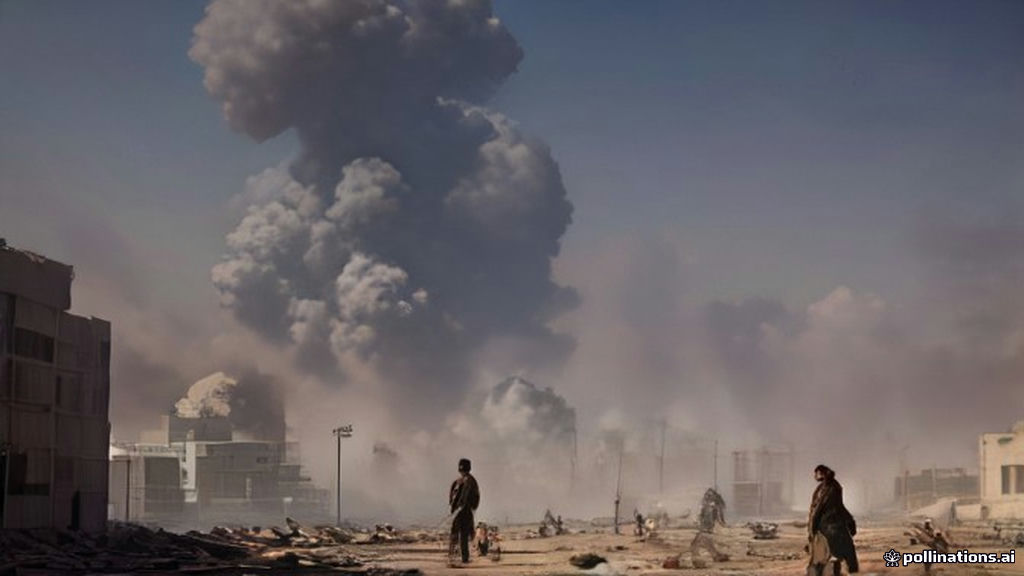
Reporting for 24x7 Breaking News. Drone attacks have killed at least four people and severely damaged a United Nations building on the outskirts of Sudan's capital, Khartoum, in a stark escalation of the ongoing conflict. The precise timing and perpetrators of the strikes remain unclear amidst the chaotic and rapidly deteriorating security situation across the nation. The incident underscores the profound humanitarian crisis gripping Sudan, as civilian infrastructure and vital aid operations face increasing risks.
Escalating Violence Casts Shadow Over Humanitarian Efforts
The reported drone strikes, which occurred on the fringes of the capital, have sent shockwaves through the international community, which has been desperately trying to broker peace and deliver aid to millions affected by the protracted fighting. The damage to the UN facility raises serious concerns about the safety of personnel and the continued delivery of essential humanitarian assistance to a population on the brink of widespread famine.
Sources within the region, speaking on condition of anonymity due to security concerns, described a scene of devastation and fear. The attacks highlight the indiscriminate nature of modern warfare and the devastating impact it has on civilian life and international efforts to alleviate suffering. This latest violence compounds the already dire situation, where access to food, water, and medical care is severely restricted for vast swathes of the population.
Sudan's Descent into Conflict: A Complex Web of Power Struggles
Sudan has been embroiled in a brutal power struggle between the Sudanese Armed Forces (SAF) and the Rapid Support Forces (RSF) since April 2023. The conflict, which erupted from a dispute over the integration of paramilitary forces into the regular army, has plunged the nation into a devastating civil war. The fighting has displaced millions and claimed thousands of lives, creating one of the world's most severe humanitarian emergencies.
The involvement of drones in the conflict, as evidenced by these recent attacks, points to a militarization of tactics that further destabilizes the region. Such weapons systems can be employed with precision but also carry the risk of significant collateral damage, as tragically demonstrated by the casualties and damage to the UN building. The complexity of the conflict makes it difficult to attribute responsibility for specific attacks, often leading to a cycle of recrimination and further violence.
The Wider Geopolitical Ramifications
The ongoing instability in Sudan has broader geopolitical implications, affecting regional security and international diplomatic efforts. The nation's strategic location in the Horn of Africa makes its stability crucial for neighboring countries and global trade routes. The protracted conflict risks creating a breeding ground for extremist groups and further exacerbating refugee crises.
International bodies, including the United Nations, have repeatedly called for an immediate ceasefire and unimpeded humanitarian access. However, these appeals have largely gone unheeded, with both the SAF and RSF continuing their military operations. The damage to the UN facility is a direct blow to these international efforts and signals a growing disregard for international humanitarian law.
This situation echoes concerns seen in other global hotspots where drone technology is increasingly employed, sometimes with devastating consequences for civilian populations and infrastructure. The expansion of drone warfare in various conflicts raises questions about international regulations and accountability for their use. For instance, the evolving nature of aerial conflict has been a persistent concern in regions like Eastern Europe, where similar advancements have been observed.
The Human Cost: A Nation Pushed to the Brink
Beyond the geopolitical chessboard and military strategies, the most profound impact of these attacks is on the ordinary Sudanese people. Families are torn apart, homes are destroyed, and the basic necessities of life are becoming increasingly scarce. The four lives lost in these strikes represent not just statistics, but individuals with families, dreams, and futures tragically cut short.
The damage to the UN building is more than just structural; it represents a blow to the hope for peace and recovery for millions. It makes the already arduous task of providing food aid, medical supplies, and shelter even more challenging. The psychological toll on the population, living under constant threat of violence and displacement, is immense and will have long-lasting consequences.
The international community's response, while present, often struggles to keep pace with the escalating humanitarian needs. The destruction of vital infrastructure like the UN facility hampers these response efforts further, creating a vicious cycle of need and unmet demand. This situation demands a renewed focus on diplomatic solutions and robust humanitarian support to prevent a complete collapse.
The Path Forward: A Plea for Peace and Accountability
The international community faces a critical juncture in its response to the Sudan crisis. A sustained and unified diplomatic push is required to compel the warring factions towards meaningful negotiations and a lasting ceasefire. Simultaneously, humanitarian aid must be scaled up significantly, with guarantees for safe passage and delivery to all affected areas.
Holding perpetrators of war crimes accountable is also paramount to deter future atrocities and uphold international humanitarian law. The damage to UN property and the loss of civilian lives necessitate a thorough investigation and a commitment to justice. Without accountability, the cycle of violence is likely to continue, further devastating the nation and its people.
The global community must not turn away from the unfolding tragedy in Sudan. The lives lost and the destruction wrought by these drone attacks are a somber reminder of the human cost of conflict. A concerted effort towards peace, coupled with unwavering humanitarian support, is essential to avert further catastrophe and begin the long road to recovery for the Sudanese people.
As the international community grapples with the implications of this attack, the question remains: Will the escalating violence and destruction of vital infrastructure finally galvanize a unified global response to end the bloodshed in Sudan, or will the world continue to witness this humanitarian catastrophe unfold?
This article was independently researched and written by Hussain for 24x7 Breaking News. We adhere to strict journalistic standards and editorial independence.
Comments
Post a Comment