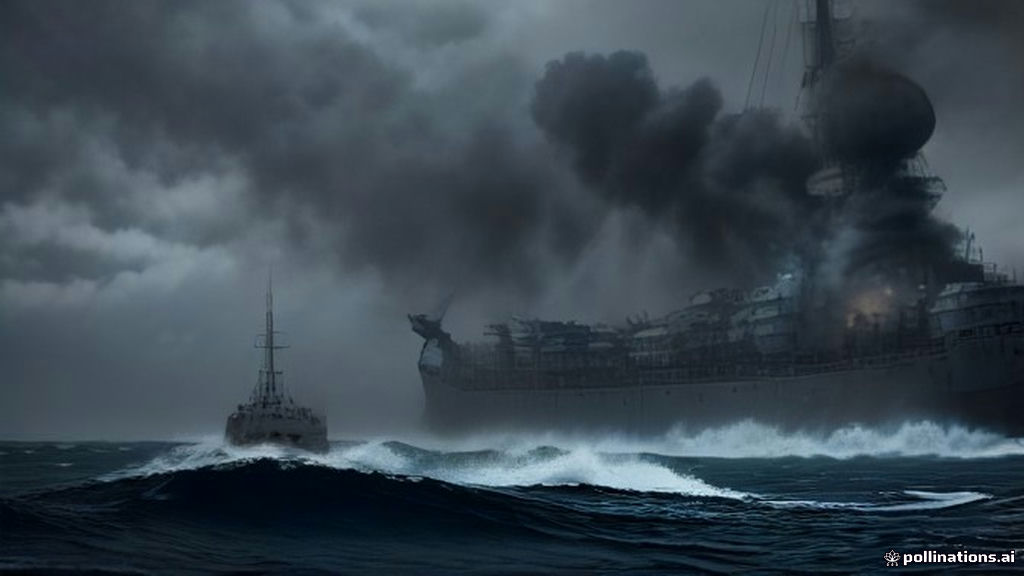
Moscow has formally accused Ukrainian forces of engaging in state-sponsored maritime terrorism in the Baltic Sea following an uncrewed aerial drone strike against a commercial cargo vessel carrying industrial supplies bound for Russian ports. Reporting for 24x7 Breaking News, military authorities and regional shipping monitors confirmed that the targeted merchant vessel sustained hull damage during the early morning incident in international waters near key Northern European sea lanes. The primary target keyword incident underscores how the geographic theater of the War in Ukraine is rapidly spreading far beyond the immediate Eastern European battlefront into strategic international shipping corridors.
- Key Takeaways
- Details of the Baltic Cargo Ship Drone Strike
- Expanding Naval Warfare: From the Black Sea to Northern Europe
- The Role of Russia's Shadow Fleet
- NATO Baltic Response and Legal Definitions of Maritime Warfare
- The Counterpoint: Legitimate War Logistics vs. Maritime Sabotage
- Risks and Real-World Impact on Global Shipping
- Editor's Opinion: A Dangerous Precedent in International Waters
- At a Glance: Key Developments to Watch
- Frequently Asked Questions
- Did Ukraine officially claim responsibility for the Baltic Sea cargo ship attack?
- Why is the Baltic Sea strategic to Russian commercial trade?
- How does international law treat attacks on merchant shipping?
- Could this incident trigger NATO's Article 5 defense clause?
Russian Foreign Ministry spokesperson Maria Zakharova released a statement condemning the strike as an unprovoked assault on civilian maritime commerce, warning that such actions endanger commercial shipping traffic across Northern Europe. Regional coast guards and maritime tracking services confirmed that crew members managed to contain an onboard fire caused by the detonation, preventing an immediate sinking. However, the attack marks a unprecedented tactical shift, bringing high-risk maritime drone warfare directly into the backyard of several NATO member states surrounding the Baltic basin.
While Kyiv has not explicitly claimed direct responsibility for this specific operation, Ukrainian defense officials have repeatedly asserted their right to disrupt Russian military logistics and commercial supply lines globally. This escalation follows earlier high-seas operations, including Ukraine sinking the Russian warship Merkury off Libya in a historic maritime strike, demonstrating an expanding blue-water capability aimed at paralyzing Moscow's logistical network.
Key Takeaways
- Kremlin Allegations: Moscow has publicly labeled a long-range drone attack on a Baltic Sea cargo ship as an act of international terrorism.
- Geographic Expansion: The strike signifies that uncrewed maritime warfare is no longer confined to the Black Sea, moving directly into Northern European commercial sea lanes.
- Logistical Target: The vessel involved was allegedly linked to Russia's merchant trade infrastructure, raising fresh concerns over the security of shadow fleet operations.
- NATO Proximity: Baltic littoral nations, including Sweden, Finland, and Estonia, are increasing naval surveillance as kinetic actions push closer to sensitive maritime boundaries.
- Shipping Costs: Global maritime insurers are re-evaluating risk assessments for merchant shipping operating throughout the Eastern Baltic region.
Details of the Baltic Cargo Ship Drone Strike
The strike targeted a medium-sized bulk cargo ship navigating near international waters, causing structural damage above the waterline and damaging critical navigational radar systems. According to regional AIS (Automatic Identification System) tracking data and initial reports distributed via public maritime feeds, the vessel reported a sudden explosion followed by a secondary fire in its superstructure. Merchant mariners operating nearby reported seeing low-flying uncrewed aerial vehicles prior to the blast.
Maritime authorities reported that no casualties occurred among the multinational crew, who managed to stabilize the ship before escort tugboats arrived to tow the damaged vessel toward a safe anchorage. Emergency naval assets from neighboring coastal states monitored the situation closely to prevent environmental contamination or navigation hazards. The attack demonstrates that long-range asymmetric warfare tools are now capable of projecting force hundreds of miles from Ukraine's territorial borders.
Western intelligence agencies have noted a steady increase in Ukraine's long-range strike capabilities, which previously focused on domestic targets and interior infrastructure. Similar tactics were deployed when a Ukrainian drone attack ignited the Novoshakhtinsk oil refinery, highlighting Kyiv's strategy of crippling Russia's economic capacity to sustain prolonged military operations.
Expanding Naval Warfare: From the Black Sea to Northern Europe
For over two years, naval warfare involving uncrewed surface vessels (USVs) and strike drones was predominantly restricted to the Black Sea theater, where Ukrainian forces successfully pushed Russia's Black Sea Fleet away from Western coastlines. The extension of these tactics into the Baltic Sea signals a dramatic transformation in naval operational doctrine. The Baltic Sea is one of the world's most heavily regulated and densely navigated maritime highways, making kinetic disruptions particularly volatile.
Military analysts suggest that targeting Russian-linked commercial maritime trade in the Baltic hits at a crucial economic lifeline. Moscow relies heavily on its Baltic ports, including St. Petersburg and Primorsk, to export crude oil, refined petroleum, and industrial raw materials. Disrupting these routes presents severe operational challenges for Russian state logistics, forcing ships to take longer, more expensive routes or seek costly naval escorts.
The Role of Russia's Shadow Fleet
A central element of this evolving conflict is Russia's reliance on an extensive shadow fleet—aging commercial tankers and cargo carriers registered under foreign flags of convenience to bypass Western economic sanctions. Western security experts point out that many of these vessels operate without standard international marine insurance and often obscure their ownership structures.
Because these vessels frequently transport dual-use goods or oil revenues intended to finance military expenditures, Ukrainian military strategist view them as legitimate economic targets. However, hitting commercial vessels in congested international waters dramatically increases the risk of collateral damage, environmental catastrophes, and unintended diplomatic confrontations with neutral nations.
NATO Baltic Response and Legal Definitions of Maritime Warfare
The Baltic Sea has effectively become a NATO-enclosed body of water following the recent accession of Finland and Sweden into the alliance. Any kinetic military action within these waters places allied surveillance assets on high alert. Coast guards and naval units from Baltic NATO members have intensified maritime patrols, monitoring potential signal jamming, unidentified drone movements, and irregular ship movements.
From a legal perspective, the incident creates complex challenges under international maritime law and the law of armed conflict. Moscow contends that striking a flagged merchant vessel in international waters constitutes illegal piracy and maritime terrorism under international conventions. Conversely, legal scholars note that under the San Remo Manual on International Law Applicable to Armed Conflicts at Sea, merchant ships making an effective contribution to military action or transport can lose their immunity from attack.
Diplomats in European capitals are exercising extreme caution, urging all parties to refrain from actions that could destabilize freedom of navigation. The presence of critical undersea infrastructure in the Baltic, including telecommunication cables and power interconnectors, makes regional governments hypersensitive to any military activity that could spark wider maritime instability.
The Counterpoint: Legitimate War Logistics vs. Maritime Sabotage
The geopolitical debate surrounding long-range strikes on commercial logistics highlights sharply opposing legal and strategic viewpoints between Moscow, Kyiv, and international observers.
Russian officials argue that Ukraine is conducting reckless attacks on civilian infrastructure that threaten non-combatant merchant mariners and global trade stability. They argue that expanding drone strikes to international sea lanes violates international maritime safety agreements and risks severe environmental damage in sensitive brackish sea environments.
On the other hand, defense analysts aligned with Kyiv contend that Russia cannot treat international ocean corridors as safe havens for transporting war materiel and sanctions-busting exports. They maintain that as long as Moscow utilizes commercial shipping routes to finance and supply its ongoing war efforts, those supply lines remain legitimate military objectives. Proponents of this view argue that asymmetric strikes on logistics are essential for offsetting Russia's traditional superiority in heavy weaponry and naval hull count.
Risks and Real-World Impact on Global Shipping
The immediate real-world consequences of maritime strikes in Northern Europe fall heavily on the global shipping industry, commercial sailors, and everyday consumers. As risk perceptions escalate across the Baltic Sea, international maritime insurance underwriters are expected to raise war risk insurance premiums for all commercial vessels operating in eastern Baltic transit routes.
Increased insurance overhead inevitably translates to higher freight rates for consumer goods, raw industrial inputs, and energy commodities moving into and out of Northern Europe. Shipping lines may also be forced to implement extra security measures, alter planned routing schedules, or delay sailings, introducing fresh friction into global supply chains that are already coping with geopolitical disruptions in the Red Sea and Middle East.
Furthermore, the human safety risk to merchant mariners cannot be understated. Commercial crews consisting of seafarers from developing nations often find themselves caught in the crossfire of high-tech asymmetric military operations, facing sudden drone strikes, fires, and potential sinkings in frigid northern ocean waters.
Editor's Opinion: A Dangerous Precedent in International Waters
In our assessment, the expansion of drone warfare into the Baltic Sea represents a profoundly troubling escalation that threatens to erode fundamental principles of international maritime safety. While Ukraine's strategic imperative to disrupt Russian war finance and military supply lines is entirely understandable within the context of total defense, normalizing kinetic attacks on commercial vessels in international sea lanes sets a perilous global precedent.
The Baltic Sea is not an open ocean; it is a shallow, densely trafficked, ecologically fragile body of water surrounded by densely populated sovereign nations. An uncontained fire on a chemical or oil-laden cargo ship could easily spark an ecological catastrophe, devastating fragile marine ecosystems and coastal economies across several NATO member nations. Moreover, the risk of miscalculation or mistargeting in heavily congested waters remains dangerously high.
The international community must not treat the militarization of commercial trade routes as an inevitable feature of modern warfare. Stronger regulatory enforcement against shadow fleets, combined with clear international consensus on maritime boundaries, is urgently needed to prevent global sea lanes from turning into uncontrolled battlegrounds for asymmetric warfare.
At a Glance: Key Developments to Watch
- Insurance Premiums: Watch for immediate adjustments to war risk surcharges imposed by Lloyd's Market Association underwriters for Baltic voyages.
- NATO Naval Deployments: Monitor whether Baltic alliance members deploy additional mine-countermeasure and anti-drone escort frigates along commercial shipping lanes.
- Russian Retaliatory Measures: Observe whether Moscow attempts to impose naval blockades or increase electronic warfare jamming against shipping communications in the Gulf of Finland.
- Shadow Fleet Audits: Track European Union and UK efforts to tighten enforcement against uninsured merchant ships operating under foreign flags of convenience.
Frequently Asked Questions
Did Ukraine officially claim responsibility for the Baltic Sea cargo ship attack?
Kyiv has not formally confirmed or denied executing this specific strike. However, Ukrainian defense agencies routinely maintain that any commercial or military asset supporting Russia's war effort is considered a valid strategic target regardless of location.
Why is the Baltic Sea strategic to Russian commercial trade?
The Baltic Sea houses key Russian ports such as St. Petersburg, Primorsk, and Ust-Luga. These ports handle a massive portion of Russia's crude oil, refined fuel, fertilizer, and bulk raw material exports destined for global markets.
How does international law treat attacks on merchant shipping?
Under international humanitarian law, civilian merchant vessels are protected from attack unless they are actively being used for military purposes, carrying war materiel, or serving as naval auxiliaries to a belligerent power.
Could this incident trigger NATO's Article 5 defense clause?
Because the targeted ship was a Russian-linked commercial vessel in international waters, NATO's collective defense provisions under Article 5 are not invoked. However, allied forces are closely monitoring the region to protect sovereign territorial waters and critical undersea infrastructure.
Is Ukraine’s strategic expansion of long-range maritime strikes into the Baltic a necessary disruption of Russia’s war supply chain, or does it unacceptably elevate the risk of a wider regional naval conflict?
This article was independently researched and written by Hussain for 24x7 Breaking News. We adhere to strict journalistic standards and editorial independence.
Comments
Post a Comment