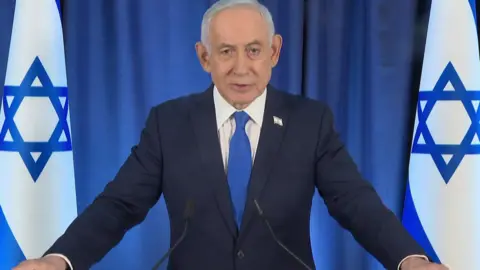
Reporting for 24x7 Breaking News. Jerusalem – The narrative surrounding Israel's conflict with Iran has shifted. While the ultimate goal of regime change in Tehran appears increasingly distant, Israeli military and political leaders are now framing the recent military actions as a profound alteration of the Middle East's strategic landscape, even without the complete toppling of the current Iranian government.
- A Decades-Long Confrontation Reaches a New Apex
- Redefining Victory: A Shift in Strategic Goals
- Navigating the Political Tightrope at Home
- The Ripple Effect: Economic Worries and Global Stability
- Frequently Asked Questions (FAQ)
- What was the primary goal of Israel's recent military actions against Iran?
- Has the conflict in Iran impacted global oil prices?
- What is the current assessment of the damage to Iran's weapons programs?
A Decades-Long Confrontation Reaches a New Apex
For decades, Prime Minister Benjamin Netanyahu has anchored his political identity to the singular mission of defending Israel against its perceived Iranian nemesis. Now, having engaged in direct military confrontation, his rhetoric has amplified, describing the conflict as "a fateful campaign for our very existence." This sentiment is echoed by the Israeli military's chief of staff, who declared it "an operation to secure our existence and our future in the land of our forefathers for generations to come." One former national security advisor even characterized it as "a golden opportunity to change the direction of the whole Middle East."
Neri Zilber, a journalist based in Tel Aviv and policy advisor to the Israel Policy Forum, observes, "This is the culmination of what [Netanyahu] has tried to rebrand as the War of Redemption, which in his mind started on October 7, 2023. And this is - if not the last war - then the big war against Iran." He adds, "Benjamin Netanyahu is still selling a major victory," noting Israel's continued focus on potential regime change long after the Trump administration ceased discussing it publicly.
Regime change in Iran would have significantly altered the regional security calculus for Israel, potentially cutting off funding, training, and weapons supplies to adversaries like Hezbollah in Lebanon and Hamas in Gaza. However, following the targeted air strike that reportedly killed Iran's Supreme Leader Ayatollah Ali Khamenei and calls for the Iranian people to rise up, Netanyahu's public statements now suggest the war might conclude with the existing regime still in power.
Redefining Victory: A Shift in Strategic Goals
In his first press conference since the conflict escalated, Netanyahu informed Israelis that the bombing campaign had already irrevocably shifted the balance of power in the Middle East in Israel's favor. "We can already say with certainty: this is no longer the same Iran, this is no longer the same Middle East, and this is not the same Israel," he stated. This declaration is interpreted by some within Israel as an indication that the nation may be preparing to de-escalate, particularly as spiraling oil prices potentially pressure the U.S. government to advocate for an end to the hostilities.
The broad support within Israel for the war was partly predicated on the expectation that it would curtail Iran's and its proxy forces' persistent regional activities. Following the previous conflict in June 2025, the Prime Minister had proclaimed a "historic victory" that would "stand for generations," asserting that it had "removed two existential threats": Iran's alleged pursuit of nuclear weapons, which Tehran consistently denies, and its ballistic missile program. Yet, Israel found itself engaged in conflict again just eight months later, as Iran was reportedly accelerating its missile program and planning to move sensitive nuclear facilities deeper underground.
The central question now facing Netanyahu is how long Israel can maintain its security advantage without achieving regime change. Military officials assert that the damage inflicted on Iran's weapons infrastructure this time is far more substantial than in previous confrontations. Production sites and leadership figures were targeted, alongside missile stockpiles and launch platforms.
Lt Col Nadav Shoshani, a spokesperson for the Israel Defense Forces (IDF), described the military objective as removing threats "for a prolonged period of time," noting that "some of it is permanent, and some of it is semi-permanent." This suggests a strategy focused on degrading Iran's capabilities rather than its political structure.
Navigating the Political Tightrope at Home
Maj Gen Yaakov Amidror, a former Israeli national security adviser and senior fellow at the Jerusalem Institute for Strategy and Security, explained that even without popular uprisings in Iran, Israel can achieve its core objectives by weakening the regime to the point where it can no longer pose a significant threat. "If we could achieve regime change, that would change the Middle East. But we know our limitations, we're not a superpower, and we have to be humble in our decisions," he commented, underscoring a pragmatic approach to the situation.
Defense correspondents for major Israeli publications report intelligence suggesting early signs of internal strain within Iran's security apparatus, including "internal tensions within the Revolutionary Guard and isolated cases of desertion." This intelligence, if accurate, could bolster the argument for a strategy of sustained pressure rather than immediate regime-change intervention.
Netanyahu has hinted at a strategy where Israel creates the conditions for internal change and then withdraws, allowing Iran's domestic pressures to take their course. However, this approach carries significant political risks for the Prime Minister domestically. The initial promise of a decisive end to the Iranian threat through regime change was a powerful narrative that secured broad public backing for the conflict. If the regime remains in place, questions will inevitably arise about the long-term implications and the potential for future confrontations.
The Ripple Effect: Economic Worries and Global Stability
The ramifications of sustained conflict in the Middle East extend far beyond regional security. For ordinary Americans, the specter of escalating tensions often translates into tangible economic anxieties. Experts are already warning of potential price shocks at the grocery store and at the gas pump. As seen in past geopolitical disruptions, instability in major oil-producing regions can send global energy prices soaring, directly impacting household budgets and contributing to inflation. This underscores the interconnectedness of global events and their tangible impact on everyday life, a concern echoed in discussions about broader economic stability and the future of markets, such as those following Blackstone's January sell-off.
Beyond economics, the human cost of prolonged conflict is immeasurable. The displacement of populations, the toll on civilian lives, and the psychological impact of living under constant threat are realities that resonate globally. While the geopolitical machinations play out on the international stage, the fundamental pursuit of peace and security for all peoples remains a paramount concern, a principle that guides our reporting and our understanding of these complex situations.
Frequently Asked Questions (FAQ)
What was the primary goal of Israel's recent military actions against Iran?
Initially, a significant objective for Prime Minister Netanyahu was to achieve regime change in Iran, which he believed would fundamentally alter regional security. However, the stated goals appear to have evolved towards degrading Iran's military capabilities for a prolonged period.
Has the conflict in Iran impacted global oil prices?
Yes, there are concerns and expert warnings that spiraling oil prices are a consequence of the conflict, potentially putting pressure on governments to seek de-escalation and directly affecting consumer costs.
What is the current assessment of the damage to Iran's weapons programs?
Israeli military officials report that the damage inflicted on Iran's weapons programs is substantial and potentially permanent or semi-permanent, targeting production sites and leadership alongside missile stocks.
The strategic landscape of the Middle East has undeniably shifted, but the ultimate success of Netanyahu's Iran strategy hinges on whether degrading military capabilities will provide lasting security, or merely set the stage for the next inevitable confrontation. Is a prolonged period of reduced Iranian threat enough for Israel, or is regime change the only true path to lasting peace in the region?



This article was independently researched and written by Hussain for 24x7 Breaking News. We adhere to strict journalistic standards and editorial independence.
Comments
Post a Comment