A Desperate Pivot Toward Diplomacy Amidst Ongoing Fire
Reporting for 24x7 Breaking News, the Lebanese government has officially called for direct negotiations with Israel to establish a framework for ending the escalating conflict with the Iran-backed militant group Hezbollah. During a virtual meeting with senior European Union officials on Monday, Lebanese President Joseph Aoun outlined a four-point peace plan intended to secure the nation’s borders and restore state sovereignty.
- A Desperate Pivot Toward Diplomacy Amidst Ongoing Fire
- The Anatomy of the Proposed Four-Point Plan
- The Real-World Impact on Displaced Families
- A Humanitarian Perspective
- Frequently Asked Questions (FAQ)
- What are the four pillars of the proposed peace plan?
- Why is the Lebanese government struggling to disarm Hezbollah?
- How many people have been affected by the recent escalation?
- Join the Conversation
The proposal marks a significant, if fraught, shift in Beirut’s approach to the crisis. President Aoun, in an unusually blunt assessment, characterized Hezbollah’s actions as an illegal military operation that operates in direct opposition to Lebanon’s national interests. He argued that the militia’s decision to engage in cross-border violence has pushed the country toward the brink of state collapse.
The Anatomy of the Proposed Four-Point Plan
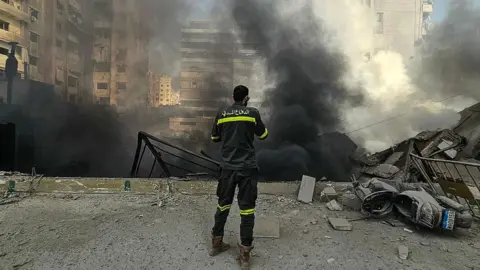
Under the conditions laid out by the Lebanese leadership, the path to stability involves a synchronized set of actions. First, a complete truce must be established to halt the near-daily Israeli strikes that have plagued the southern suburbs of Beirut and the southern border regions. This truce is intended to provide the necessary conditions for the second phase: the total disarmament of Hezbollah.
Third, the proposal calls for significant international assistance directed toward the Lebanese Armed Forces. The goal is to empower the national military to regain control over 'areas of tension' where Hezbollah has long maintained a dominant presence. Finally, the plan dictates that Lebanon and Israel must enter into direct negotiations under international sponsorship to formalize these arrangements into a lasting security agreement.
However, the diplomatic path remains narrow. Israeli officials have expressed deep skepticism regarding Beirut’s capacity or willingness to enforce these demands. Joshua Zarka, the Israeli ambassador to France, noted on Tuesday that the Lebanese government has yet to take meaningful, tangible steps to disarm the militia. For Israel, the conflict is not merely about a ceasefire; it is about the structural removal of the threat posed by Hezbollah’s rocket and drone capabilities.
The Real-World Impact on Displaced Families
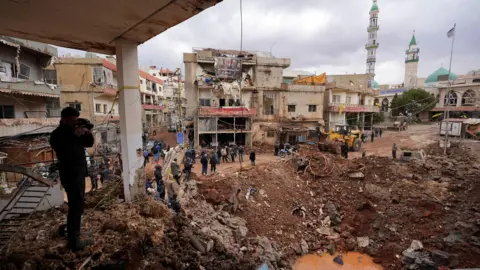
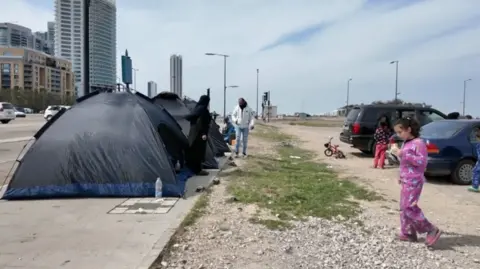
While high-level diplomats debate the merits of a peace plan, the reality on the ground remains dire for the civilian population. According to the United Nations, more than 700,000 people have been displaced over the past nine days of intensified conflict. This figure includes an estimated 200,000 children, many of whom are currently living in makeshift shelters, such as schools that have been repurposed to accommodate the sudden influx of refugees.
For families like that of Ahmed al-Halabi, a father from the Dahieh area of south Beirut, the diplomatic rhetoric offers little immediate comfort. 'We were running away from the bombing! There’s no safety!' he told the BBC. His story is a poignant reminder of the human cost of these regional struggles; the psychological toll on children who have experienced multiple cycles of violence is profound and lasting.
The broader regional tensions, which saw Power Cuts and Nightly Explosions: Tehran Residents Trapped in Escalating Conflict, suggest that this crisis is not isolated to Lebanese borders. The volatility of the situation continues to strain the global economy and the stability of the Middle East, leaving millions to wonder when the next siren will sound.
A Humanitarian Perspective
The urgency for a diplomatic breakthrough is not merely a matter of political posturing but a desperate bid for human survival. When a state loses the ability to protect its citizens from external strikes or internal militia violence, the moral cost is borne by the most vulnerable. Advocating for a durable peace requires both the courage to negotiate and the strength to enforce the rule of law within one's own borders.
The international community, including the United States and France, has previously attempted to mediate agreements, such as the November 2024 ceasefire. The collapse of that deal highlights the fragility of relying on external mediation without deep, internal commitment from all parties involved. Peace requires the prioritization of human life over the strategic gains of armed factions.
Frequently Asked Questions (FAQ)
What are the four pillars of the proposed peace plan?
- A complete truce between Israeli forces and Hezbollah.
- The formal disarmament of Hezbollah.
- International support to strengthen the Lebanese Armed Forces.
- Direct negotiations between Israel and Lebanon under international mediation.
Why is the Lebanese government struggling to disarm Hezbollah?
- The Lebanese state currently lacks the military capacity and political leverage to unilaterally challenge the militia's presence, which has been entrenched for decades.
How many people have been affected by the recent escalation?
- The United Nations reports over 700,000 people displaced, including 200,000 children, with hundreds of fatalities reported since the latest round of strikes began.
Join the Conversation
As the regional situation remains volatile, the demand for a permanent security arrangement grows louder. Whether through diplomatic pressure or internal reform, the need for a solution that protects the civilian population from the fallout of an escalating conflict is undeniable. If the Lebanese government lacks the military power to disarm Hezbollah, is it realistic to expect a diplomatic solution to succeed without direct international intervention?
This article was independently researched and written by Hussain for 24x7 Breaking News. We adhere to strict journalistic standards and editorial independence.
Comments
Post a Comment