
Reporting for 24x7 Breaking News, dozens of the world's leading economies have committed to an unprecedented release of emergency oil reserves, a dramatic move aimed at stabilizing soaring prices and addressing critical supply shortages exacerbated by escalating geopolitical tensions. The coordinated action, involving all 32 member nations of the International Energy Agency (IEA)—a bloc representing the vast majority of global energy production and consumption—will see 400 million barrels of oil made available on the market.
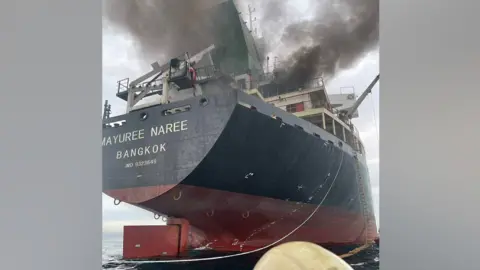
This substantial drawdown from strategic petroleum reserves is a direct response to the severe disruption of oil exports through the Strait of Hormuz, a vital chokepoint for global energy transit. The conflict, described by officials as presenting challenges "unprecedented in scale," has effectively halted significant oil shipments, driving prices up by nearly a quarter since hostilities began.
A Record Release Amidst Unprecedented Disruption
The scale of this oil release dwarfs previous interventions; it is more than double the amount released following Russia's full-scale invasion of Ukraine in early 2022. However, energy analysts caution that this measure is a temporary balm rather than a cure. The 400 million barrels represent only about three to four days of global oil consumption, or approximately two weeks of the volume typically shipped through the Strait of Hormuz.
The member countries of the IEA, which include major industrialized nations like the United States, the United Kingdom, and many of the world's wealthiest countries, are mandated to maintain at least 90 days' worth of their nation's oil consumption in reserve. Collectively, these nations hold over 1.2 billion barrels in emergency stockpiles, with an additional 600 million barrels held by industry under government obligation. Releasing a third of these government-held stocks is a significant undertaking that cannot be easily replicated in the short term.
Navigating the Complexities of Global Oil Markets
The logistics of releasing such vast quantities of oil are complex. The oil itself is not stored in a single location but rather in terminals and refineries across member nations. Companies like Shell and BP, for instance, can earmark stocks held at various facilities to meet their reserve obligations. When these reserves are tapped, it doesn't result in an immediate surge of new crude entering refineries.
Instead, producers make more oil available for refineries to procure. However, a significant hurdle remains: a global shortage in refining capacity. This bottleneck means that even with more crude available, the ability to process it into usable fuels is constrained. Nick Butler, former head of strategy at oil giant BP, highlighted the finite nature of these reserves, stating, "Once you release them, they don't exist."
Jorge Leon, an energy analyst at Rystad Energy, echoed these sentiments, noting that while the release provides some relief, it "doesn't fully offset that disruption." He observed that the market had anticipated this move, yet price reductions have not met expectations, suggesting deeper underlying issues at play.
Beyond Oil: The Growing LNG Crisis
The impact of the ongoing conflict extends beyond the crude oil market, significantly affecting global liquefied natural gas (LNG) supplies. Fatih Birol, the IEA's Executive Director, expressed grave concern over the "very challenging" gas market, noting that there are "few options" to address a 20% slump in LNG supplies. This has led to a sharp increase in LNG prices, with the benchmark UK LNG price surging approximately 70% since the conflict began, although still below the peaks seen during the Russia-Ukraine war.
The UK's Energy Secretary, Ed Miliband, affirmed the nation's commitment to international cooperation, stating, "The UK is playing our part in working with our international allies to address the disruption in oil markets." This unified approach underscores the gravity of the energy security challenges facing the global community.
Frequently Asked Questions (FAQ)
What is the International Energy Agency (IEA)?
The IEA is an autonomous intergovernmental organization established in the 1970s to advise governments on energy policies. Its 32 member countries represent approximately two-thirds of the world's total energy consumption.
How much oil is being released?
A total of 400 million barrels of oil are being released from the emergency reserves of IEA member countries.
Why is this happening now?
The release is a direct response to supply shortages and soaring oil prices caused by disruptions to exports from the Middle East due to a conflict, impacting the crucial Strait of Hormuz shipping route.
Is this a long-term solution?
Energy experts largely view this release as a short-term measure. The amount released is limited relative to global demand, and strategic reserves are finite resources that cannot be replenished quickly.
The coordinated release of record oil reserves marks a critical moment in global energy policy, highlighting the fragility of supply chains in the face of geopolitical conflict. As nations grapple with unprecedented market volatility, the long-term implications for energy security and international relations remain a pressing concern. The current situation also brings to mind past geopolitical flashpoints and the complex responses required, echoing the intricate dynamics seen in situations such as the unrest in Iran, where external calls for change often carry significant, unpredictable costs.
So, while the world scrambles to stabilize energy markets with finite reserves, how can we foster genuine long-term energy independence and peace without relying on reactive measures that deplete our critical resources?


This article was independently researched and written by Hussain for 24x7 Breaking News. We adhere to strict journalistic standards and editorial independence.
Comments
Post a Comment