
The Anatomy of an Escalating Regional Conflict
Reporting for 24x7 Breaking News, our team is tracking a rapidly deteriorating situation across the Middle East. Following a night of intense combat operations, emergency services in southern Israel have confirmed that ballistic missile strikes impacted the towns of Arad and Dimona, resulting in over 160 injuries. This latest aggression marks a significant shift in the hostilities that have gripped the region since the joint US-Israel military operations commenced on February 28.
- The Anatomy of an Escalating Regional Conflict
- The Human Cost of Geopolitical Volatility
- Our Editorial Perspective: The Path Toward De-escalation
- People Also Ask
- How are global markets reacting to the Middle East conflict?
- What is the current status of the conflict between Israel and Iran?
- How can civilians in the affected regions find safety?
As first reported by the BBC, these strikes hit perilously close to critical nuclear infrastructure. While Iranian state media frames these actions as a direct retaliatory response to an earlier strike on the Natanz nuclear facility, the reality on the ground for civilians is one of profound terror and destruction. We have observed a cascade of events from Tehran to Beirut, highlighting a conflict that is expanding far beyond its initial borders.
The Human Cost of Geopolitical Volatility
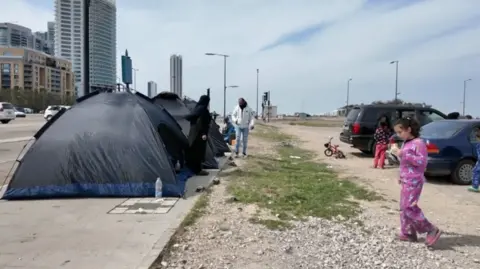
Beyond the high-level military analysis, we must acknowledge the devastating impact on ordinary families. In Beirut, residents are fleeing neighborhoods in droves, with many forced to sleep in tents or cars as the sound of airstrikes echoes through the night. Similarly, those caught in the crossfire in Tehran are facing the collapse of essential infrastructure, including the targeting of Mehrabad Airport.
The human toll is not restricted to the combat zones. British nationals stranded in Dubai are currently under government directives to shelter in place, as regional air traffic faces indefinite suspensions. The instability is already rippling through the global economy, as analysts like Nick Marsh from the BBC examine the potential for long-term spikes in food and fuel costs. When we look at these events, we see more than just tactical military maneuvers; we see a humanitarian disaster in the making that demands urgent international attention.
For those interested in the broader context of how global stability is currently being tested, consider looking at our recent reporting on the humanitarian catastrophe in Sudan. The parallels in how infrastructure targets impact the most vulnerable populations are stark and sobering.
Our Editorial Perspective: The Path Toward De-escalation
In our view, the current trajectory of this conflict is entirely unsustainable. While nations often invoke the language of security and retaliation to justify kinetic strikes, the mounting death toll—including the tragic loss of at least nine lives in Beit Shemesh—proves that these actions primarily serve to endanger civilian life rather than protect it. We believe that global powers have a moral imperative to move beyond the cycle of tit-for-tat violence that has now ensnared multiple nations.
What concerns us most is the normalization of war-time rhetoric. When we see celebrations in the streets of various global cities following news of destruction, it reflects a dangerous fragmentation of our shared humanity. We must ask ourselves: at what point does the cost of geopolitical posturing outweigh the value of human dignity? True security will not be found in the rubble of airports or the wreckage of residential towns; it can only be achieved through a radical commitment to diplomacy and a recognition of our interconnected fate.
People Also Ask
How are global markets reacting to the Middle East conflict?
Global markets are responding with heightened volatility, particularly regarding shipping lanes in the Strait of Hormuz. Analysts are closely monitoring supply chain disruptions and the potential for sustained inflation in global energy and food prices.
What is the current status of the conflict between Israel and Iran?
The conflict has evolved into a multi-front regional war following the joint US-Israel operations on February 28. Recent actions include ballistic missile attacks on southern Israel and reciprocal airstrikes on key Iranian infrastructure, including Tehran’s airports and oil depots.
How can civilians in the affected regions find safety?
Local authorities and international embassies are currently advising residents to shelter in place, monitor official government communications, and, where possible, move away from identified military or strategic targets. For those abroad, it is critical to register with your home country's embassy immediately.
As this regional conflict continues to jeopardize global shipping and stability, the world watches with bated breath to see if a ceasefire can be negotiated. The question remains: Will the international community intervene to force a diplomatic resolution, or are we witnessing the beginning of a long-term, systemic collapse of regional peace?




This article was independently researched and written by Hussain for 24x7 Breaking News. We adhere to strict journalistic standards and editorial independence.
Comments
Post a Comment