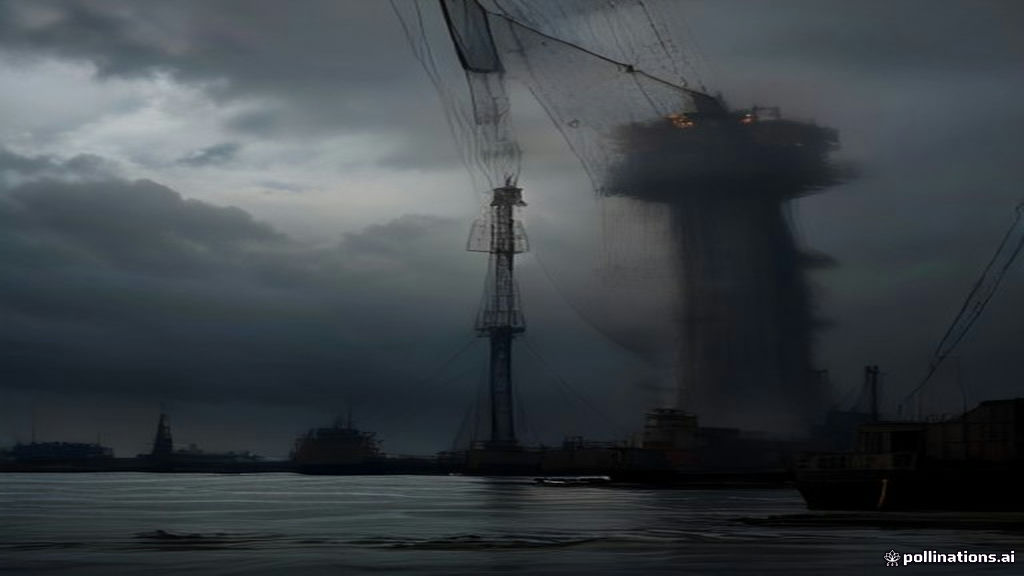
Reporting for 24x7 Breaking News, our investigative desk has been closely monitoring a high-stakes maritime operation unfolding in the murky waters of the River Thames, where engineers are actively removing the heavy masts from a submerged, bomb-laden World War II munitions ship in an urgent bid to avoid a catastrophic explosion. This delicate engineering feat involves neutralizing structural hazards surrounding the infamous wreck, a vessel that has slumbered beneath the busy British waterway for decades while holding a lethal payload of unexploded ordnance.
- Unraveling the Maritime Hazard Beneath the Thames Estuary
- The Delicate Balancing Act of Salvage Engineering
- Editorial Perspective on Wartime Legacies and Public Safety
- Frequently Asked Questions (FAQ)
- Why are the masts being removed from the WWII ship in the Thames?
- Is there an immediate danger of the ship exploding?
- How much explosive material is still onboard the vessel?
- Who is overseeing the current salvage operations?
- Engineers are surgically removing the masts of the WWII shipwreck SS Richard Montgomery in the River Thames.
- The vessel holds approximately 1,400 tonnes of high explosives from a wartime cargo mishap.
- Maritime authorities stress that the operation is entirely preventative to eliminate stress on the deteriorating hull.
- Surrounding shipping lanes and local communities remain under close environmental and safety monitoring.
Unraveling the Maritime Hazard Beneath the Thames Estuary
The operation centers on the SS Richard Montgomery, an American Liberty ship that ran aground and broke apart on a sandbank in the Thames Estuary back in August 1944. According to comprehensive reports from organizations like Reuters and the BBC, the vessel still contains roughly 1,400 tonnes of live explosives distributed across its fractured forward holds. For decades, maritime safety experts have debated the best approach to mitigate the persistent threat, weighing the severe risks of a controlled detonation against the dangers of leaving the decaying structure untouched.
Our editorial team examined official briefings from the UK Maritime and Coastguard Agency (MCA), which emphasized that the current intervention focuses specifically on the upper masts and rigging. Over decades of tidal pounding and corrosive saltwater exposure, these towering metal structures have grown structurally unstable, placing undue mechanical stress on the underlying hull. By cutting away the masts, marine contractors aim to reduce wind resistance and overall physical load, buying crucial time for long-term remediation planning.
As we navigate complex geopolitical and historical legacies, it is worth noting how much of our modern infrastructure still contends with the literal ghosts of past conflicts. Similar logistical hurdles and security dilemmas often surface in other international arenas, echoing the complex policy debates seen when Rubio Travels to Uzbekistan to Forge US Ties and Economic Trade or when policymakers grapple with broader technological fallout, such as when Zuckerberg Admits AI Agent Development Is Hitting Unforeseen Roadblocks. Every systemic challenge demands rigorous oversight, transparency, and a commitment to public safety above all else.
The Delicate Balancing Act of Salvage Engineering
Executing heavy industrial work mere miles from major population centers requires an extraordinary degree of technical precision. Commercial salvage operators deployed specialized crane vessels to the site, working within strict weather and tidal windows to dismantle the steel masts piece by piece. Any miscalculation could trigger friction or structural shifting, transforming a preventative operation into an unintended disaster.
Local authorities have established strict exclusion zones around the wreck site, halting commercial traffic temporarily to protect working crews and passing vessels. Environmental protection groups have also maintained a constant vigil, ensuring that the heavy machinery and cutting operations do not disturb the sensitive marine ecosystem of the Thames Estuary. This careful coordination underscores a broader societal priority: safeguarding human life and ecological health while confronting the material remnants of historical warfare.
Editorial Perspective on Wartime Legacies and Public Safety
In our view, the ongoing management of the SS Richard Montgomery highlights a profound truth about the long-tail costs of global conflict. Wars do not simply end when treaties are signed or armistice bells ring; their physical manifestations linger in our fields, our oceans, and our collective infrastructure for generations. We believe that governments have an absolute moral duty to invest proactively in remediation, rather than waiting for structural failures to force emergency action.
When we look at the communities living along the Thames Estuary, their quiet resilience deserves our deepest respect. They coexist daily with a potential hazard born from a global fight against fascism, trusting that modern engineering and regulatory vigilance will hold the line. It reminds us that collective security is an ongoing, daily commitment requiring steady hands, robust funding, and uncompromising transparency from public institutions.
Frequently Asked Questions (FAQ)
Why are the masts being removed from the WWII ship in the Thames?
The masts are being removed to reduce structural weight and wind stress on the decaying hull of the SS Richard Montgomery, minimizing the risk of accidental detonation.
Is there an immediate danger of the ship exploding?
Maritime authorities maintain that while the risk remains low under normal conditions, the deteriorating state of the vessel necessitates preventative engineering interventions.
How much explosive material is still onboard the vessel?
The wreck holds an estimated 1,400 tonnes of high-explosive munitions left over from its wartime cargo load in 1944.
Who is overseeing the current salvage operations?
The UK Maritime and Coastguard Agency (MCA) is directing the operation in coordination with specialized marine engineering contractors.
Ultimately, this complex maritime operation underscores our collective responsibility to confront historical dangers before they transform into modern tragedies, ensuring that the bomb-laden WWII ship is managed with the utmost technical rigor and care. So here is the real question — do you believe governments are doing enough to clean up hazardous wartime infrastructure before disasters strike, or are we simply waiting for the inevitable?
This article was independently researched and written by Hussain for 24x7 Breaking News. We adhere to strict journalistic standards and editorial independence.
Comments
Post a Comment