The End of an Internal Combustion Icon
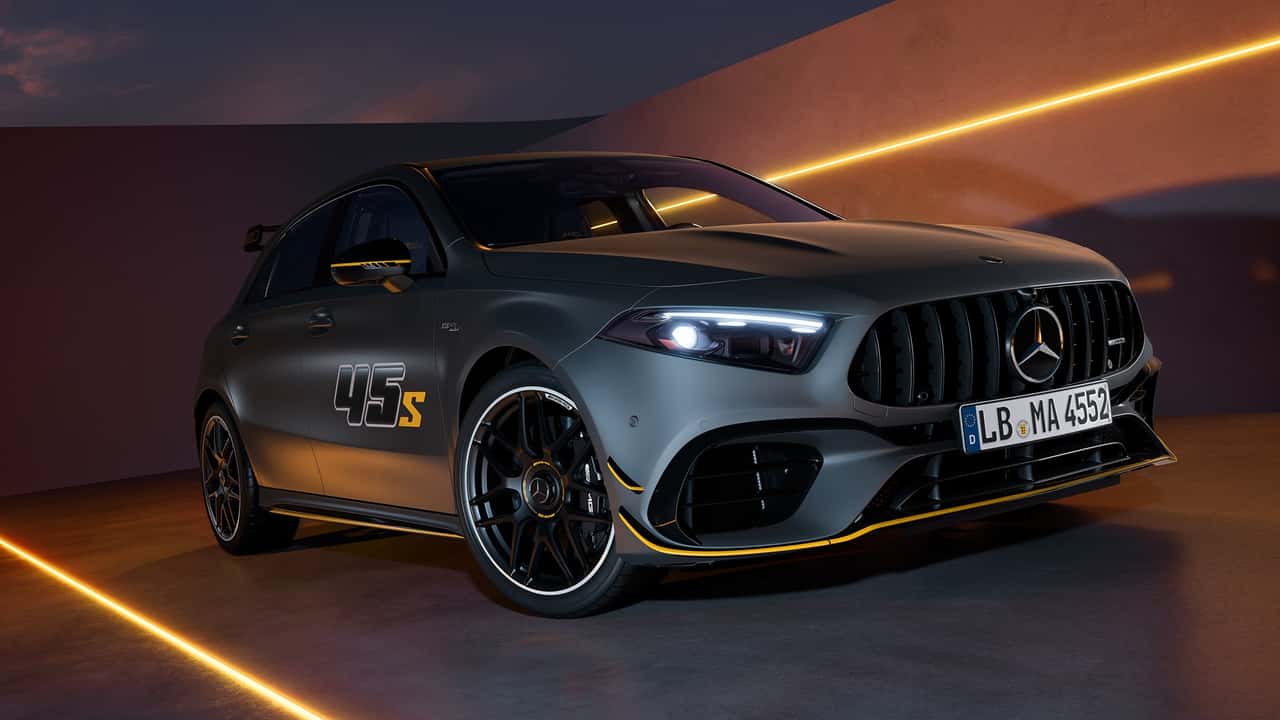
Reporting for 24x7 Breaking News from our automotive desk, we confirm that the Mercedes-AMG A45 S Final Edition is marking the definitive end of an era. As the industry pivots toward electrification, this high-performance hot hatch serves as a final, thunderous salute to the fire-breathing, turbocharged four-cylinder engines that defined a decade of accessible speed.
- The End of an Internal Combustion Icon
- Engineering the Last Great Hot Hatch
- The Reality of Performance Ownership
- A Shifting Market Landscape
- Our Take: The Final Bow
- Frequently Asked Questions (FAQ)
- Is the A45 S Final Edition mechanically different from the standard model?
- Why is Mercedes-AMG discontinuing this specific model?
- Should I buy this as an investment or a daily driver?
- The Road Ahead
While we initially sourced details regarding this farewell via automotive industry reports, the sentiment across the enthusiast community is palpable. This isn't just a trim package; it is a farewell tour for a powertrain that defied the laws of physics, squeezing over 400 horsepower from a 2.0-liter displacement. As we have seen in recent industry shifts—much like the complex dynamics discussed in our coverage of media narratives—the transition away from traditional performance icons is rarely met with universal approval.
Engineering the Last Great Hot Hatch
The A45 S has long been the gold standard for those who demand supercar-baiting acceleration in a practical, hatchback footprint. Under the hood, the M139 engine remains a masterpiece of modern engineering. It delivers an astonishing 416 horsepower and 369 lb-ft of torque, sent through a sophisticated all-wheel-drive system that allows the car to claw its way out of corners with surgical precision.
This Final Edition iteration brings with it a collection of aesthetic refinements that highlight its track-focused DNA. From bespoke matte paint finishes to the signature yellow accents that have become synonymous with AMG's most aggressive track-ready machines, the car looks as fast as it feels. The suspension remains taut, bordering on punishing on uneven surfaces, but that is the trade-off for the level of grip this vehicle provides. It is a machine that demands your attention, forcing the driver to engage with every gear change and corner entry.
The Reality of Performance Ownership
Owning an A45 S in 2026 is an exercise in appreciating the zenith of combustion-based performance. While the world debates the future of autonomous transit—a subject we recently examined in our report on liability and self-driving technology—the A45 S remains a deeply analog experience in a digital world. The dual-clutch transmission snaps through gears with a violence that EVs simply cannot replicate in terms of auditory feedback.
However, prospective buyers should consider the cost of ownership. Beyond the initial premium for this Final Edition, fuel economy remains a significant hurdle for the average daily commuter. In our assessment, this vehicle is not meant to be a high-mileage grocery getter, but rather a weekend weapon for those who still believe that the internal combustion engine has a soul worth preserving.
A Shifting Market Landscape
The decision to retire the A45 S comes as Mercedes-AMG pivots its resource allocation toward high-performance hybrid and battery-electric drivetrains. This move reflects a broader trend of legacy automakers racing to meet tightening emissions standards across the European and North American markets. While competitors continue to flirt with electrification, the A45 S remains a stubborn holdout of pure, mechanical engineering.

We note that even Mercedes' own SUV lineup is subject to these strange design trends, as evidenced by the recent confusion surrounding the camouflage on the new AMG G63 Cabriolet, which leaves us questioning if manufacturers are hiding secrets or simply playing games with the automotive press. The A45 S, by contrast, hides nothing. It is an unapologetic, loud, and fast hot hatch that wears its performance credentials on its sleeve.
Our Take: The Final Bow
In our view, the retirement of the A45 S is a moment of profound sadness for the automotive enthusiast. We believe that we are witnessing the closing chapters of the "Hot Hatch" era, a segment that provided a gateway for countless young drivers to experience real-world performance without the cost of an exotic supercar. While we acknowledge the necessity of a greener future, there is a distinct human element lost when the visceral experience of a turbocharged engine is replaced by the silent efficiency of a battery pack.
We feel that Mercedes-AMG is doing the right thing by sending this model off with a proper send-off, rather than letting it fade into obscurity. This car represents a time when mechanical complexity was celebrated, not just as a means to an end, but as the end itself. It is a collector's piece from the moment it rolls off the assembly line, and for those who can afford the entry price, it is a necessary addition to the garage.
Frequently Asked Questions (FAQ)
Is the A45 S Final Edition mechanically different from the standard model?
The Final Edition focuses primarily on aesthetic upgrades, interior trim, and exclusive paint options, while maintaining the same 416-hp powertrain and chassis dynamics that made the standard model a class leader.
Why is Mercedes-AMG discontinuing this specific model?
The discontinuation is part of a broader corporate strategy to transition toward electrified powertrains and to meet increasingly stringent global emissions regulations that make the high-output 2.0-liter internal combustion engine difficult to justify in mass production.
Should I buy this as an investment or a daily driver?
Given its status as the 'Final Edition' of a legendary nameplate, it is likely to hold value better than standard trims, though it remains a highly capable daily driver if you can tolerate its stiff suspension and premium fuel requirements.
The Road Ahead
As we watch the final units of the Mercedes-AMG A45 S roll off the line, we are reminded that automotive progress often comes at a cost to the driving experience we hold dear. This vehicle remains the gold standard for the modern hot hatch, a testament to what can be achieved when engineers are given the freedom to prioritize performance above all else. Would you choose this final combustion masterpiece over a similarly priced high-performance electric vehicle, or has the time for the internal combustion engine truly passed?
This article was independently researched and written by Hussain for 24x7 Breaking News. We adhere to strict journalistic standards and editorial independence.
Comments
Post a Comment